Thursday, May 27, 2021

Experience with Adenium


As a compulsive ‘plant buyer’ I tend to pick up a lot plants from the flower shows & exhibitions,

without knowing or researching much in detail about them. I do it the reverse way. I buy it on an

instinct and then go about reading and searching out details about them!

One such plant I bought was an Adenium more commonly known as Desert rose.


This tall branch is my adenium


In my earlier apartment, I had a west facing window sill space for all my plants. So, the new plant

had to share a small space amongst the other plants I had picked up or propagated myself. To 

name a few plants that I possess, there are Mint & Basil plants that I propagated from the store 

bought stem, a Ficus (Peepal) tree picked from the roadside, a Mili that I got from the apartment 

complex’s common garden and some orchids.


My plant grew spindly and long (as you can see in the second picture )as there were just a few

hours of sun, which led me to research more about it. After few days of intense ‘google-ing’, I

came to know that it was called a desert rose and it was a succulent. As I got to know more about

the requirement to grow this plant, I understood that it’s most important need was to grow

receiving maximum sunlight, which I couldn’t provide due to the way sunlight falls on my

apartment. But reading further I learnt that I could prune it to give it a shorter height which may

be beneficial for the plant’s growth. And it is during all of this, that I  came across the term 

‘regular pruning’ and ‘hard pruning’ for the first time.

Pruned plant with more branches


Pruning is done to encourage plant to give out more branches. The plant will spread out rather than

just growing upward. Hard pruning is when you cut the entire top half only leaving the caudex. Ideal  

is 6 inches however people who experiment has done much more. There are many methods to get

more branches but that will be for later.

Now coming back to my plant, as I love to learn new thing the ‘hard way’, I could not resist

trying hard pruning even though I wasn’t sure were that would lead. I always like to jump first

and then look, even though this way you can fall flat on your face more times than not.

Something always pushes me to do things recklessly or let’s say ‘trial and error’ method (I have

tried umpteen times grafting another rose scion bud to a plant when I was a kid and of course all

failed(all that remained of my trials were the scars on the mother plant). I never shy away from

that, but of course it’s another story whether my plants make it or not!

So, one fine day I sat with my plant which I uprooted and realised the root had swollen up inside

the soil. I was equally excited and nervous to see and verify my new learnings. In all that

excitement I trimmed some roots, hard pruned the caudex, repotted it in soil, watered it heavily

and left it.

Hard pruned plant


 I came back to check every day only to see no activity or progress on the plant’s side. On third or

fourth day I realised the caudex was becoming softer (I did not realise what was happening). In a

few days more the rot took over and that was the end of my first Adenium trial. Waaah! I was sad

having lost my plant and another experiment gone sour! Determined, I started looking for reasons

why it rotted.

And finally, after consuming many YouTube videos on this subject and online search, I found the

reason! My greatest mistake was watering a plant with exposed and not healed roots. So, from

there I learnt few things more.


My first one to flower

Never cut the roots and plant it directly. I might have picked up such ideas from seeing videos by

expert who planted it in that manner but they might have taken other precautions as well! So, the

best method is (for all the newbies like me), when you prune do not repot the plant at the same

time. Make sure you trim the roots and let the plant dry and heal  for 4-5 days before repotting.

The potting media must be free draining so add 50 % sand. 

Do not water for a week. Adenium have enough water stored in their caudex to survive a long 

draught being a desert succulent.


So, these were my takeaways from my first plant ‘pruning’ experiments. I have collected a lot more

plants since then, but luckily or with more knowledge I have not lost any more of my plants! And the

learning process has been awesome and I have been rewarded with amazing blooms!!


Wednesday, June 3, 2020

Mango Thokku Pickle / Grated Mango Pickle


Mango Thokku Pickle / Grated Mango Pickle


As I have earlier mentioned, I have been in the South of India for more than a decade, first for my college studies in Andhra and then in Kerala. So I have been influenced by its food not all but some have become my favourites. Apart from a variety of yummy vegetarian curries that I love so much, the tangy, spicy and hot pickles are absolutely my favourite!... and by God what varieties!
My pickle ‘love story’ began in my college hostel days. As we had to stay in the hostel for the whole academic year we stocked a lot of bottled stuffs from home to last a while. And so did all of my roommates, who came from almost all parts of India! And the main trade that went inside the hostel was –‘the pickle exchange’! And it was at one of these pickle exchanges, that I was introduced to ‘Mango Avakkai’ pickle! It was love at first bite! That taste of that masala drenched, sour and crunchy cut pieces of raw mango dripping off all that gingili oil ; oh, it was heaven!. I’m pretty sure everyone who studied there will have a bunch of stories about their own late night ‘pickle-rice’ rendezvous.

Today I will not talk about that recipe but a new one which is easy to make and less time consuming.

Ingredients

Raw mango 2 nos 1 kg
Gingili oil 1 cup/sesame seed oil
Roasted fenugreek powder 1.5 tbsp
Roasted mustard seed powder 1.5 tbsp + ½ tsp
Chilli powder 3 tbsp
Garlic 10 to 12 cloves (big) if using small double it
Curry leaf a sprig
Hing /asafoetida ½ tsp
Turmeric ½ tsp
Salt to taste


Method

First roast fenugreek and mustard in low flame, don’t burn it set aside.
Peel the mango and grate it .I used Totapuri mangoes; you can use any raw mango.

Heat the oil and splutter mustard add garlic and curry leaf, the original recipe did not have garlic and mustard but I like the Andhra style pickle so I added these two ingredients. Cook in medium flame, see to that it does not burn.

Once the garlic fries a bit add the grated mango and sauté for two minutes add turmeric and chilli powder and sauté for another two minutes. Chilli powder is as per your heat tolerance . Check to see if the mango has cooked.

Add hing and the remaining masalas mix well cook in low flame for a min or two. Switch off the flame and let it cook transfer it to a clean jar.
Pickle is ready to use.


See you again with one of my favourites 😁

Monday, May 25, 2020

Sprouting Fenugreek/Methi


Fenugreek sprouts


I had posted about fenugreek stir-fry earlier, so now I am going to post how to make the sprouts. Its super easy and is ready by day four. It is not necessary to wait that long however as I do not have access to Methi greens so I let them grow a bit more so that I can use it to make Methi paratha which is normally made using Methi leaves.Leafy greens are a rarity in Trivandrum in normal times,now that the Corona (Covid19)has take over and we are holed up indoors, we don't even get to see the normal amaranth overgrown greens.So here is to the microgreens which has become a regular at my dinner table.As long as I have something healthy, pesticide free,I am happy to use it in my cooking.
Be it methi paratha,sprout stir fry or just as salad I relish it.

Lets start.....
Take one fourth cup of fenugreek. 

Wash it and soak it overnight in a bowl of water.


Next morning the seeds will swell twice its size, rinse it and put it in a big strainer. When I made moong sprouts I used to rinse the seeds once a day to wet it, however while researching to sprout soybean I got to know they rinse the seeds often, as often as in two hours gap.Which means even at night 😊 you can miss the night part it still grows well.
This keeps the micro greens clean, hydrated and plump.Below picture at the end of day one .

Run it under the water in the sink as often as you remember, its ok if you forget the 2 hour gap but don’t let it dry out.At the end of day three they have grown so much.


Keep them hydrated and your sprouts are ready rinse it in a bowl to remove all the seed covers and store it in a ziplock bag once the water has drained off.It stays in a fridge for a week.


Happy Sprouting !


Thursday, May 21, 2020

Gardening


"Never underestimate the healing power of a quiet moment in the garden"-Nature Hills Nursery.


My love for plants, trees and gardens must have been ingrained in my heart and soul since I was a little kid. Because I can’t remember a time when I was not interested in them! And even though I can’t track back to an exact time when it all started, the  clearest of all those early memories are of my ‘Baje’s(granpa) garden. When I say garden, do not get any ideas of garden that was grandiose in nature! Perched on the mountain slope, as most homes in Darjeeling, facing the glorious Kanchenjunga range, our garden wrapped itself around our little house, terraced and winding like a python resting after a glorious meal. Even though my Baje’s garden wasn’t huge, everyone liked it and said he had a green thumb!

I could still vividly see the delightful time we got to spend in his garden planting little saplings of cucumber, pumpkin, squash, mustard greens, beans and corns, watering them, dirtying our hand in mud, eating baby cucumbers even before they start to swell and my grandfather chasing me away from the garden! I would sneak behind him to open up the ripe Cape gooseberry (sometimes half done) pick and pop it into my mouth and leave the cover intact! Of course, he would find out and chase me out again. He must have known what ‘the little rat’ did in his garden 😀. It’s with such fondness that I remember those times with him and even though he passed away in the 80’s, those memories still brings a smile to my face.

Kale

My father must have inherited that passion for gardening from my baje, but his passion was ten times higher! And he started experimenting with wider variety of flowers and plants.As I had to help out with this increase in 'chores',with his increase in 'experiments', the memories are always not great😅.But I learnt a lot from him all of which I'm able to apply now in my garden!

My dad had around 10 to 15 bonsai ranging from 2 to 10 years, some of them were my favourite! he not just had a robust collection of bonsai but also had a huge collection of Cymbidium orchid which he would collect and bring home each time on his official visit to different parts of Darjeeling.And I helped him prune,train the branches and re-pot as well.After all the years of hard work, at one point he felt it was cruelty to plant them in small pots so he replanted all of them on the ground.

This maple shown in the picture here, once a bonsai,has grown into a huge tree ,standing tall in our small garden!

In spring my dad would take us to the forest to collect the forest leaf to make compost. On bright sunny days, cicadas crying loud and hard (that sound to this day, reminds me of home!) all of us, the family of four, would head to the nearby forest with sacks for a day of hard labour(or at least I thought so then).

He would collect the compost and fill the sacks as per the weight we could handle. The easy part was going down to the forest as you walk or rather run downhill, all boisterous and chirpy!. The return on the other hand was all uphill, a herculean task! One that would make our hearts thump so hard that you literally feel it in your chest, like in the 'looney toons' cartoons; thump, thump thump,...😵.


One of biggest challenge in maintaining a garden, especially in a high altitude hilly terrain is – Water! And Darjeeling has a notorious history of water shortage, even back then when the population was less but more so now,as the population has exploded beyond comprehension around the town!. Water was and still is an important commodity to be used sparingly for everyday use, let alone for gardening! Imagine having rows and rows of plants to water. Who would get the water from the springs? Yup! You guessed it right, me😂! I could write and write stories titled’ adventures of a water carrier’ but that is for another day. It was a horrible and fun job at the same time, walking all the way up and standing in queue with the whole village, waiting for our turn to fill the jerry cans.

Anyways, coming back to the flowers, my dad had three seasonal flowers on display every year. First to bloom would be Cineraria in the springs along with the perennial ones like Cyclamen, Gloxinia and Primula.  Planting seeds would start in September for spring display. So by March we had a huge display of around 30 to 40 flowering plants .Every morning as the sun goes up, we could hear the buzzing of honey bees and house flies in equal numbers fighting for space for the precious nectar! So imagine the amount of compost required for the flowers, phew!


Squash from the garden


One of my foraged plants from the forest long ago flowers every spring inviting all kind of birds.
By the time we were enjoying these amazing display of cinerarias in full bloom, the begonias would start popping out from their bulbs! So potting them would start and we had to place it in every inch of space possible. These plants would take around two months to grow, so by monsoon these delicate beauties would be showing off their outstanding brilliance.The stands outside the house would slowly change the ‘tenants’ for the next season.The cineraria producing seeds for the next year would slowly leave, giving way for the new comer 'begonias'!.


And then around June, we start with taking chrysanthemum cuttings from the old plants. Alongside the begonias these autumn flowering perennials would root and establish strong shoots for the autumn flowering. Along with the chrysanthemum in the pots, beautiful marigolds will be competing with them in the garden or anywhere they have sprouted.And even though by autumn, things starts getting cold and gloomy, these flowers would bring so much cheer and joy to everyone of us!

Magnolia

By writing so much about these flowers, all I am trying to say is how much work I had to do 😁..
Now looking back, it is not the hard work that I remember but the colourful riot they brought to my life and the joy and wonder they gave to everyone passing by! That feeling can never be replicated. Happy Gardening!

Tuesday, May 12, 2020

Bhuteko Farsi ko biya ko sukkha achar/Roasted pumpkin dry achar


Farsi ko biya ko achar


I have been thinking for long, by long I mean years and years to do some research about Nepali traditional foods. Whenever we type Nepali food, mostly food from Nepal is displayed in the internet. I belong to a small Himalayan district in the state of West Bengal, India, so basically I am an Indian Nepali. Our traditional foods have almost disappeared from our table we are more influenced by other cultures. Look at Momo aka dumpling, it was introduced by the Tibetan refugees and now it has become one of our most loved foods.

There is a joke in Darjeeling, before the joke I  will tell you that eating out is not in our culture majority of the people still have their main meals at home. It’s the snacking that happens in the market .I remember in the 80’s when I  was a kid my parents would take us for a bowl of thukpa (soupy noodles) or a plate of momo after a movie. That was it!  So here is the joke (weirdness of Darjeeling jokes, mostly its only the locals who understand ha ha).... Finally The joke.... we (we as in people of Darjeeling) enter a restaurant and the waiter gives us the menu we take 10 minutes to look at the menu from top to bottom reading all the dishes the hotel has to offer and at last we order a plate of momo ha ha ha .....


 I am not here to revive our food culture but I would like to find out more so that they do not disappear from the face of this earth. I am more curious at this point.

Growing food in the hilly terrain is a challenge and people make do with whatever they have. We don’t have the luxury of beautiful ingredients but look for nutritious and fulfilling meals. So I am in search of those simple fulfilling meals of the past. But for now I would like to give a simple recipe of the humble pumpkin seed which has emerged as a super food of today. For people in olden days it was to utilise every bit of what they had.
For this recipe have made changes to the original recipe by adding skin removed pumpkin seed you get in the market and replaced lemon juice with chaat masala.

Ingredients

Pumpkin seed 1 cup(whole seed with cover)+ 1 table spoon of pumpkin seed (skin removed)

An inch of dry ginger

Garlic 5-6 cloves

Red chilly powder 1 tablespoon (or as per your heat tolerance)/or whole dry red chilly 4 nos

Sesame seed 1 tablespoon

Chaat masala 1 tsp (please adjust to taste it has to be a hint of tanginess)

Salt to taste


Method

Remove the pumpkin seed from the pumpkin wash it and let it dry. You can collect it over a period of time. What I do is collect wash, dry and roast slightly in oven and store till I get another batch of pumpkin seed .If you cut a big pumpkin you can collect at a go.
I had half roasted the pumpkin seed about 5 to 7 mins in microwave oven before roasting in the gas .You can do it directly in the gas stirring it so that it does not burn in one side only in low flame. Roast it evenly till you start to hear the popping sound of the seeds.I added the whole dry ginger 1 whole chilly and garlic as well when I roasted the seeds.
Remove from heat and let it cool.
Dry grind all the ingredients together till you get a fine powder, taste for salt and the tanginess and adjust .Store in clean glass jar. You can keep it outside or in fridge for longer life.

Enjoy !


Friday, May 8, 2020

Stir fry fenugreek sprouts

Fenugreek sprouts stir-fry


Fenugreek also known as methi is an annual plant whose leaves we consume .The seed is used as a spice in Indian cooking and has lots of health benefits. The leaves are used as curry and are very important winter greens in Northern India. Aloo methi being the most popular of the dishes. Methi leaves can be added to wheat flour dough to make methi paratha. The dried leaves are called kasuri methi and are added to curries like the chole or chickpea curry. It is beneficial and may control blood sugar, heart burn, inflammation, helps milk production in lactating mothers and it has side effects as well. Lets not dwell into medical uses anything used in moderation does not harm the body.

Did you know you can sprout it?
Yes, we can.


We can consume it every day as salad, just add salt and a squeeze of lemon juice. I can just chomp off (as my 8 year old says to anything he likes) any day but beware it tastes a bit bitter.
I sometimes make this sprout and as the shelf life of the sprouts are not very long, say about a week at most in the fridge; we have to consume it fast.

By the way I have not told you that I am a Nepali, born and brought up in Darjeeling. I have lived a decade in North while studying and now married to a South Indian so my cooking can be a mix of all types. Not that i am an expert nor was I interested in cooking while growing up, but somehow along the way i have picked up some skill to cook decently. For a long time i thought of starting a food blog but i know i will not keep it up same with my travel journals which i have not updated since 10 years(but that happens to be the time since my status changed to ‘married’ ha ha...such is life your priorities change and so on....

The only positive remark about my cooking when i was in school and back in Darjeeling was my brother who told me once “you cook anything as long as its sweet i will eat it”.
As i am writing about food let me not miss this line as well before i write about sprout stir-fry. After i started to work i stayed with my brother in Delhi and he would always prefer home cooked food from there my food journey began.Quite late in life non the less it started and i am thankful for that.

 My grandfather and father both are good at cooking. I will leave that to next time.....


Here is my simple recipe of stir fried methi sprouts.

Ingredients ( i am not much of a follower of proportions )

1 big onion or 2 medium onions
3 medium tomatoes
4 crushed clove of garlic
An inch of ginger julienned
2 green chillies (as per your heat tolerance)
Salt to taste
3 tablespoon oil
And a cup of methi sprouts.

Method

Heat oil add ginger and garlic stir fry a bit till it becomes light brown add chillies and onion sauté till translucent. Then add tomato add salt as the tomato cooks faster. Once tomato is mushy add the sprouts .Sauté for 2 to 3 minutes and switch off the flame. Add coriander leaf for garnish.

It’s done!  Easy and healthy serve with hot rice or roti.

Wednesday, July 20, 2011

Birds of Darjeeling

CHESTNUT CROWNED LAUGHING THRUSH


I see quite a few birds around my house so i had it in mind why don't i write something about them as well.The most difficult part is to get a nice and clear picture of them.They are so elusive and fast ,just cant stick to one place at least for me till i can take some cute pictures of them.I have managed to click some pictures of them and i am going to try again and again till i can get good pictures to show around.
I had no clue about the names in English ,not that i know a great deal in Nepali he he he...:)


I got interested to know more about them once i followed a thread in India mike a travel forum and the thread starts with:- Which bird is this ? The experts gives us the name and their cry .So i somehow started getting interested to post some of mine pictures as well just to know there names.


Now i know few names of the birdies and would like to share with people who might be interested to know about them.
The first one is Chestnut-crowned laughing thrush i don't know why the name laughing thrush because i cant make out it laughing.I will not even write its scientific name because i cant identify with name.
here is the picture .


These birds are found in the altitudes ranging from 1000 to 3400 m.It is found in nepal,Bhutan,North east India (himalayas),Burma,china.Read they are extinct in pakistan.

Monday, August 2, 2010

Gongura(red sorrel ) pickel

This is how the Gongura leaves look like.


I have been fascinated with Andhra pickle from the first time i have tasted it .We used to have amazing midnight pickle rice sessions in the hostel.I hope my roommates who actually bought pickles from home remember that. The best one was the mango avakkai and the second, the gongura leaves.After college got over ,like any other North Indian i used to buy packets of priya pickle brand and savor them.One fine day i thought of looking up for gongura leaves.I typed in the information in the google search engine and i found few information in the Wikipedia as in this link http://en.wikipedia.org/wiki/Gongura .Somehow the pictures were not clear so i was still clueless.All i knew was that the leaves had sour taste.Then i came upon a blog of Sailu where i saw the leaves in http://indiacuisine.blogspot.com/2006/01/weekend-herb-blogging-14-red-sorrel.html.I know we do not get these leaves in Darjeeling but the picture remained in my mind.


Yesterday when i was buying vegetables in Mumbai(where my husband is based now) i happened to see something familiar amongst the leafy veggis,Ha can u believe it.My eyes got fixed on the greeny bunch and picked it up without a second thought.Gongura ha ha!!
So without fail i made my first gongura pickel.


My final output which i am going to taste tonight...i cant wait.

Monday, July 13, 2009

Call of the Kanchenjunga-Gochela ,Sikkim


Kanchenjunga at Sunrise

The trip to Gochela, was in one of my must do list.I wanted to do a full fledged trekking ,what I meant was travelling with food ,tent,guide etc etc.I had earlier done day hikes up to 5-6 hours a day but nothing where I required to cook and camp.I was really excited about this new trip which was decided for April -May more so I was interested to see the Rhododendrons bloom.

Growing up in the hills of Darjeeling and seeing the rhododendrons display their fiery red
colour during spring was something engrained in my memory.It was something I associated with being at home.I remember the time when my friends and I used to climb the trees to pick the flowers and eat to our hearts content.The next would be displaying a purple tongue at each other and giggling to glory.So after many years I would be home again and see the rhododendrons bloom.
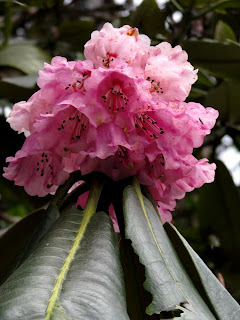
Rhododendron
The dates were decided for 24th April to 2 nd May,starting at Gangtok and ending at Darjeeling.We were five people doing this trek-Praveen from Bangalore,Renju from Kerela,Nishad and Nayan my brother ,cousin and me.

I reached Gangtok on 23rd April to do the shopping for the trip,Nishad was already in Gangtok.Praveen and Nayan would join us a day later at yuksom.We bought some vegetables and packed foods from Gangtok rest of the items were bought at Yuksom.We met Renju at Gangtok,we were meeting for the first time.(Praveen,Renju and me Met through a travel forum-IndiaMike)He too accompanied us to the market as he had to buy trekking shoes as well.The evening passed away unnoticed with all of us trying to remember everything we required for the trip.
Next morning we boarded a shared jeep to Yuksom which departed at 7 am.The route we took was through Legship,Ravangla finally to Yuksom around 1 pm.We stayed at Yangrigang,stayed on the upper rooms,clean,spacious rooms with a good restaurant with plenty of Tongba.The other two reached Yuksom at 5.30 pm from Jorthang.

The remaining of the shopping was
completed at yuksom.That evening we met our Guide/Cook-Kevin,Rahul-porter and yakman-Kumar and finalized on the cost and got the material checked.The first night we had a small get-together over dinner to get to know the team members,everyone was excited.
First day of the trek and there were a lot of delays as we required one more yak and they were not available.However we started at 8.30 am by the time we did the registration at the police post and the KNP counter it was 9.30 am.With smiling faces and huge expectation of what lay ahead of us ,we started the trek.

Start of the trek


The initial walk up and down the snaky forest path was a teaser, for the rest of the day.We had to cover 16 km crossing three bridges along the way.The most difficult climb was the uphill climb from the third bridge to Bakim.


The ongoing uphill climb was relentless and we huffed and puffed all the way through stopping every 5 to 10 minutes to catch our breath and gulp a sip of water.With the final bust of energy we reached Bakhim at 5.30 pm.

At brigde two Renju scaring me
A cup of tea, sitting on a chair looking down at Yuksom far in between the hills was an achievement.Ha ha we had few kilometers uphill to cover to reach out first day's halt at Tshoka.The last few kilometers turned quite long and night descended upon us without our knowledge.

Tshoka village-last settlement before Dzongr

With no guide around it was quite difficult to navigate our way as we were ill prepared for the last bit.However finally we could see a light up on the hill,all of us were relieved.

The day ended with the first taste of walking 16 km uphill.With a bitter sweet experience we ended our day at the mountain lodge as our tent were still in Yuksom.
Morning greeted us with bright sunlight,after breakfast of chapatti and peas we started off towards Dzongri.The climb was tough along the winding uphill trek through the pine and rhododendron forests was exhausting as well as rewarding.The experience of walking itself was fruitful.The rhododendrons were starting to bloom and one could see a peek of red,white,pink and yellow throughout the forest.

The trail leads up up through the pine forest,a steep climb here and there,making us gasp for air and a constant want to wet our
mouths with water.


Resting at Phedang with no food and smiles on our face

Finally we made it to Phedang,however our yak and porters were further behind so we decided to forgo lunch.After resting for sometime and enjoying the scenery around ,then we started the last uphill climb towards Dzongri.


The uphill climb was painfully slow as we had no energy left however we were able to make it to Deorali after constant sips of glucose water .From Deorali the trail is flat then u follow a downhill path and for the last time it climbs up up and up.Once you are on top the view is rewarding with rhododendron bushes covering the hills.I sat down on a rock and visualized how this place would look when the flowers are in full bloom,the thought itself was lovely.Finally no more uphill climb the trail was flat.
We were a bit early to see the premula flowering as well but I could not miss seeing the leaf bud pushing through the wet ground with the flower bud ready to burst in joyful display.


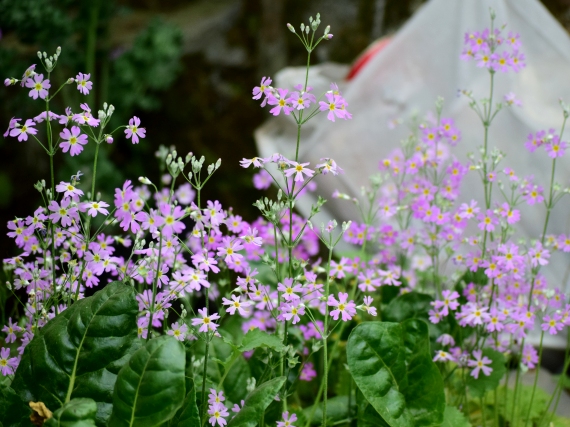
Premula one of the few who managed to smile at me.


The walk finally brought us to the Dzongri trekkers hut ,where Martin and Greg we already comfortable with hot cup of tea in their hand.They offered us a cup as well and Martin gave me his jacket to keep me warm till our yaks and luggage arrived.Next half hour we had a nice chat and a difficult time trying to get purified water using Greg and Martin's portable water purifier ha ha what a try by everybody.I guess we did something wrong this time and was unable to get any water through the filter ha ha lol:).


On reaching Dzongri Trekkers hut


Below pics of rhododendrons few had started to bloom


But we managed after some time that brought smile to everybody's face.Once our yaks reached we had to proceed to a different place to put up out tent so we walked further leaving the American brothers behind and promising to meet next day at Dzongri top.
The camping ground had a great view of the mountains beyond however it was a bit foggy and the view was hidden but at the time of sunset the clouds parted a bit to give us an amazing view .I was tired so I had a nap for sometime,somewhere between my nap I could hear my brother chatting with someone who came to visit us.Let me fill it in,when we were planning for this trip there were three parties wanting to travel to Gochela around the same time(the discussions were made in indiamike travel forum).The first group the American brothers Martin and Greg,second us starting same day and two more brothers Prashant and Nishant a day later.As we would be staying a rest day at Dzongri ,we had decided to meet up there.So here is thread where we planned our trip(http://www.indiamike.com/india/trekking-and-mountaineering-in-india-f89/seeking-trekking-parnters-for-sikkim-goecha-la-trek-t72986/5/#post698791). I got up met Prashant he had already met up with Greg and Martin and we spent some time chatting .The excitement was evident in all of us to reach Gochela.
The next morning we got up at 3 am and started towards 'the Dzongri top' to get the view of sunrise on the mountains.The climb uphill was painfully slow but we managed to be on the top just in time for the sunrise.
The Sunrise view from Dzongri
The view was awesome but i had imagined it to be better.After the wonderful experience we went back to out camping grounds.The day was sunny (but you can never predict the weather)Praveen and me went for a day hike to Laxmi lake,rest of them preferred to stay back,Renju tried till half way but gave up and returned back to the camps.

The walk was through the rhododendron bushes,once we were at the lake we took some photographs and spent some 30 minutes,but the weather were warning us of drastic consequences if we did not start back as soon as possible.We took the clue however we were caught by snowfall midway and managed to reach camp after getting half wet.We had a great time and experiencing snowfall at 13000 feet was great.The day ended eventfully.


Snowfall at Dzongri Praveen making his way slowly > 
The next morning did not greet us with great news with Nayan getting dizzy(hallucinating) and coughing heavily with slight fever.Our worst fears were confirmed,the guides said might be its the altitude sickness and we need to get him back to lower altitude.My brother volunteered to walk back to Tshoka with Nayan and rest of us would proceed as normal.However before we could start my brother came back huffing and puffing,and said he would not be able to take him alone as Nayan had started dozing on the way.We had to decide fast and after discussion the guides,porter,yakman, Renju,Nishad would accompany Nayan till Tshoka.Half the luggage were sent back.Praveen and me started towards Thansing on our own and our yak and guides would follow later once they return from Tshoka.Throughout our trip we kept missing on our lunch but we were lucky enough to find some alternative along the way.The way to Thansing is much better,gradual uphill and it was a pleasure to walk for the first time.We followed the yaks all along the way reached Thansing in the afternoon.The rest house chowkidar(guard) was good enough to make fried rice for us,we had that and waited for the guides.Once they reached we proceeded towards Lamune the last stop before Gochela.Finally Gochale the place we heard about,read about ,discussed about was within our reach,the only concern was the weather.We had our dinner early, the night was clear and with hope of good weather the next day ,we went to sleep listening to the sound of the roaring river that flowed past our camps.
We woke up to the sound of the alarm at 2.30 am.Hurriedly we had tea ,and started towards Gochela before day break.It was dark and we had to follow our guides using a torchlight.We walked in a long file on the torturous mountain path.The trek was difficult but we walked in anticipation.

<>
We walked past Samiti lake but could not see anything apart from the sound of the small stream flowing that fed the lake with water from the mountains above.Once past the lake the steep uphill climb was one of the challenge,when we were almost near the top ,day broke to give us the first view of the mountains.The weather was not satisfactory ,we could see the cloud cover over the mountains,my heart sank.My mind was working overtime,we walked all this way to see the mountains behind the clouds, that was a terrible feeling.The guides were also not so sure if we would be getting clear view.

By the time we reached the first view point,Martin and Greg were already there,waiting for the sunrise.The day was foggy but it did clear a bit to reward us the view of the Kanchenjunga way beyond.After the initial excitement of the view,we settled down to memorize the landscape at the back of our minds to talk about it in the years to come.It was amazing!

First rays on the mountains >
Once the sun rays extended their arms towards the mountains and the mountain glowed back with an orange hue,we quietly set our camera to capture the moment we were experiencing.And of course of ourselves ,posing with the mountains on fire at the background.We had to go further to the second viewpoint where we would get a closer view of Kanchenjunga,I guess at this point nobody had guessed what was to come ha ha


<>
The first drop from the top of first viewpoint towards the second was dangerous,it was a rough path down the hill.My legs almost turned to jelly,thank God it didn't ,otherwise the results would have been disastrous.


The path was full of loose pebbles making it difficult to get a grip on the ground.However we managed and then the long walk across a dried lake was long enough,the only motivating factor was the cry of the monal peasant as told by our guides.The view of Kanchenjunga from the lake floor was lovely I guess up till this point we can see quite a bit of the peak ,once we reach second viewpoint we can see the height not the breadth as it will be hidden behind the hills.The last task was in hand ,the uphill climb was tedious and scary with large pebbles all along the way,the height made matters worse as we ascended.


<>
I was scared to sit down in fear of slipping when I got up,ha ha but those moments have passed and I can look back and laugh at it now(not then :( ).I was doing quite good as all my trek partners were lagging behind,I was in reach of the second view point when I got a terrible feeling that I will not be able to go one step further.My brain was doing a great job by convincing me to stay put at that place till the group would go till the second point and return.But finally my final resolve to reach the top did the job and I slowly and steadily reached the second view point.Thank God I did that.WOW!! it was an amazing feeling to be surrounded by mountains all around.


The Kanchenjunga kept eluding us even till this point as the cloud cover was intact at the tip.
><>
However rest of the peaks were cloud free,a special mention would be Mt. Pandim which loomed on top of our head with power and might.
Finally we were at 14000 feet trying to breathe in the thin air and taking away with us the experience of a lifetime,face to face with Kanchenjunga so close it felt within our grasp.Amazing amazing amazing!!!


Clouds part and we get the full view >
The clouds finally parted for a few moments to give us a view of the Kanchenjunga from tip to toe (I could not see the bottom anyways but I'll mention tip to toe).Now one thing that was unsettling me was the return journey to Yuksom zeeeze...

View fron the second view point-lovely !


We retraced our way back to Samity lake, where I did see some blue sheep grazing however my lens were not that great to catch them crisp,the final image displayed by the camera was unfocussed.

After spending some time at the lake I reached out camp site had lunch and then started for Kokchurung the first halt on the return trip.
Premulas had just started to bloom at Kokchurung >
Kokchurung is a sleepy place a bit scary as well amongst the forest trees,with the river flowing with thunderous speed.Our guide managed to scare us with stories of ghost,I had a fitful sleep,I am sure same with the others.My only aim was to sleep without waking up in the middle of the night and not be able to go to sleep again.
The next morning was a relief and Kokchurung looked lovely in the bright sunlight(better than night).We used the short cut to Phedang rather than climbing towards Dzongri and back,but as the path was small the yaks had to go through Dzongri.Once at Phedang we were happy to be in close proximity to Tshoka our last halt before we reach Yuksom.We walked nonstop till we reached Tshoka stayed overnight ,we had camped at the rest house grounds and how can I forget the experience the last night .The whole night I was bothered by a loose horse.I guess I was scared it would accidently knock off my tents and fall on me(I was not the only one having problems,Praveen had the same problem,and we laughed our heads off in the morning).Again a second fitful night of sleep.The mobile phone signal was on but I had no charge to check about Nayan's health,I had to wait for one more day till I reached Yuksom.The last 16 km was the toughest part and never-ending but we managed to reach on time .We met Renju at Yangrigang and found out Nayan and Nishad had left for Darjeeling.Once my cell was charged I called home to find out about Nayan.He was recovering and it was altitude sickness.Thank God they returned on time for health check up.
Nishad,Praveen Me and Nayan at the background,pic taken by Renju.
We stayed at Yuksom that day returned the tents and paid our guides and tipped them for their help.Next morning Praveen left for New jalpaiguri to catch a train to Kolkota and we to Darjeeling.With this came the end of the eventful ,exhausting,wonderful,fruitful and amazing trip,until next time! :)